A music reaction live stream can become viral very fast because music gives viewers something instant to feel. One beat switch, one vocal run, one lyric, one surprise feature, or one confused face from the host can turn into a clip people want to share. That is the charm of the format. It feels alive, emotional, and unpredictable.
But the same format can also become messy. Music is heavily protected content. Reaction content can look lazy if the host only nods for five minutes. A viral clip can remove the real point of the stream. A live platform can flag, mute, interrupt, or restrict content when copyrighted music appears. YouTube says live streams are scanned for third-party content, and when third-party content remains in the stream, the live stream may be interrupted or terminated.
For Viral Livestream Sound of Text, this article belongs in the Reactions category because the real subject is not only music. It is how creators react, explain, compare, clip, and protect context when a live music moment starts spreading.
Music Reaction Streams And Music Review Streams Are Not The Same Format
A reaction stream is built around immediacy. A review stream is built around interpretation. Both can discuss the same song, artist, album, or performance, but they create different viewer expectations.
| Format | Best Use | Main Strength | Main Risk |
|---|---|---|---|
| Music reaction live stream | First listens, premieres, surprise drops, fan moments | Emotional, fast, clip-friendly, highly shareable | Can look shallow if commentary is weak |
| Music review stream | Album breakdowns, artist analysis, lyric discussion, genre comparison | Deeper, more credible, better long-term value | Can feel slower and less viral |
| Hybrid reaction-review stream | Big releases with planned commentary sections | Balances emotion and analysis | Needs discipline so it does not become chaotic |
| Clip-focused reaction stream | Short viral moments and audience replay value | Easy to repurpose into social clips | Can lose context if clipped carelessly |
| Educational music commentary stream | Theory, production, songwriting, vocal technique | Adds clear value beyond the song | Requires real knowledge from the host |
A creator who understands this difference will build a better show. A creator who does not will often call everything a reaction, then wonder why the stream gets views but little respect.
The Reaction Format Wins When The First Feeling Is The Product

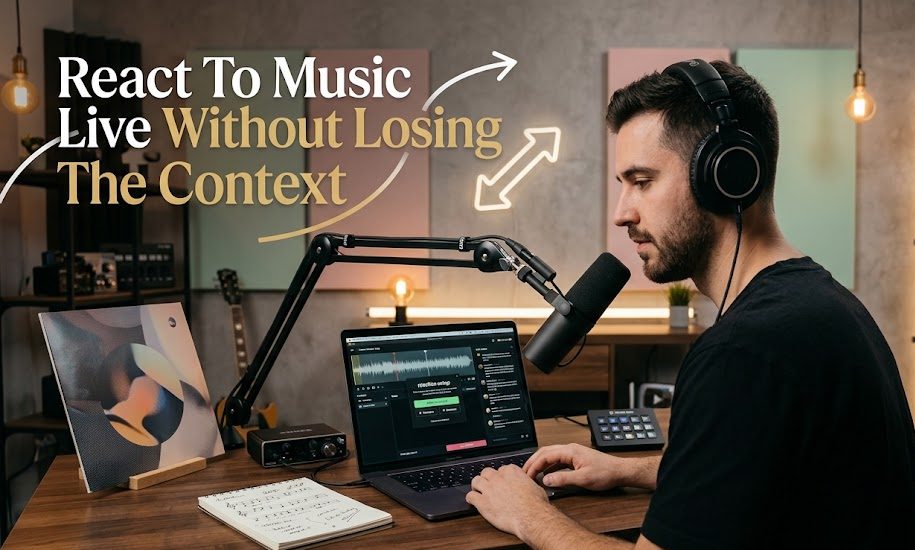
A music reaction live stream works best when viewers want to see the host experience the song in real time. The point is not only the music. The point is the face, the pause, the disbelief, the laugh, the rewind, the chat explosion, and the sudden shared feeling.
A Strong Live Reaction Needs The Host To Translate Emotion Into Words
The worst reaction stream is just someone staring at a screen while the song does all the work. The best one turns feeling into language. The host says what changed in the beat, why the chorus landed, why the vocal choice surprised them, or why the lyric feels sharper than expected.
That is where reaction becomes commentary. YouTube’s fair use guidance says commentary, criticism, research, teaching, and news reporting can be common examples of fair use under US law, but courts decide fair use based on the facts of each case.
This matters because a reaction stream should not rely on “I reacted, so it is automatically fine.” The stronger the commentary, the stronger the viewer value. The host should be adding something the original track alone does not provide.
A Reaction Stream Feels Alive Because Chat Becomes Part Of The Moment
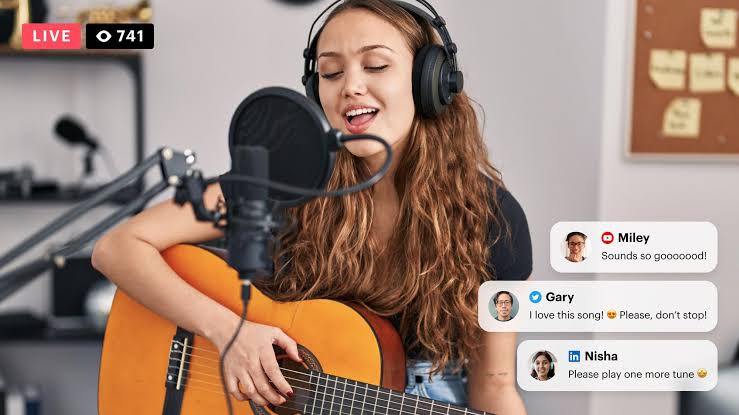
Live chat gives music reactions a different texture from recorded reaction videos. Viewers can warn the host that a beat switch is coming. They can spam lyrics. They can argue about the best verse. They can ask the host to replay one part. They can disagree in real time.
That energy is why music reactions can go viral. The audience is not only watching the host react to music. They are watching the host react to the room.
A good host knows how to use that without losing control. They pause after key sections, read selected comments, compare opinions, then move back into the music. They do not let the chat turn the whole stream into noise.
The Review Format Wins When The Audience Wants A Smarter Take
A music review stream is less dependent on shock. It is built around judgment, context, and explanation. Viewers come because they want the host’s perspective, not just their facial expression.
A Strong Review Stream Treats Music Like A Text Worth Reading
A review stream can discuss production, lyric writing, vocal performance, sampling, genre influence, artist branding, rollout strategy, music video choices, fan reception, and cultural timing. It can still be entertaining, but it has a stronger spine.
This format works especially well for:
- album reviews
- comeback singles
- artist rebrands
- award show performances
- controversial songs
- live stage analysis
- producer breakdowns
- genre comparisons
A review stream also has better replay value. Someone may not watch a two-hour reaction after the song is no longer trending, but they may still watch a smart breakdown weeks later.
Review Streams Need Confidence Without Acting Like A Gatekeeper
A music review host should sound informed, not smug. Viewers do not need a host who pretends to be the only person with taste. They need someone who can explain why a track works, where it fails, and what kind of listener might still enjoy it.
That balance matters. Music viewers are emotionally attached to artists. A careless review can turn chat defensive fast. A stronger host explains criticism with evidence from the song itself.
The Copyright Risk Is Sharper In Music Than In Most Reaction Niches
Music is not like reacting to a public speech, a cooking clip, or a meme. Music rights can involve recordings, compositions, labels, publishers, distributors, and platform detection systems.
Live Music Reactions Can Be Interrupted Before The Stream Is Even Over
On YouTube, live streams are scanned for third-party content, including copyrighted content, and YouTube says a stream may be interrupted or terminated if the third-party content remains in the stream. It also says archived live streams can receive Content ID claims after completion if the creator archives the video.
That is a real operational problem. A creator may plan a smooth reaction night, only to have the stream blocked, muted, or disrupted during the most important moment.
This is why experienced hosts often avoid playing long uninterrupted portions of a song. They pause for commentary, lower risk where possible, and think about whether the stream is adding real analysis or just rebroadcasting the track.
Twitch Treats Music Rights As A Serious Channel Risk
Twitch’s music guidelines say users should only include music in their channel if they are sure they have the necessary rights or authority. Twitch also says unauthorized music may lead to DMCA takedown requests and enforcement up to account termination, and buying music or subscribing to a music service usually does not grant rights to share that music on Twitch.
This is where many newer streamers get careless. They think Spotify, Apple Music, YouTube Music, or a purchased album gives them the right to play tracks during a livestream. That is usually not how streaming rights work.
A music reaction stream can still exist, but the host needs to understand that “I paid to listen” and “I have rights to broadcast this in my livestream” are different things.
The Better Format Depends On The Song And The Stream Goal
A creator should not choose reaction or review randomly. The format should match the release, audience expectation, and risk level.
Reaction Works Better For High-Emotion Drops And Fan Communities
A reaction format is stronger when the audience wants to experience the moment together. This often happens with artist comebacks, surprise releases, music videos, diss tracks, festival performances, fan-favorite live stages, and songs with dramatic structure.
A reaction stream works best when:
- the host has a clear personality that viewers want to watch in real time;
- the song has moments worth pausing for, not just background listening;
- the chat already has strong emotional investment in the artist or genre;
- the host can add commentary instead of letting the music carry the whole stream.
The format becomes weak when the creator plays too much music and says too little. At that point, the stream starts feeling like an unofficial listening party, not a reaction.
Review Works Better For Albums, Lyrics, Production, And Controversy
A review format is better when the audience wants a fuller opinion. It gives the host room to compare tracks, explain why an artist’s direction changed, or talk about whether the song will last beyond the first viral wave.
A review stream works best when:
- the release has enough substance for discussion;
- the host knows the artist’s previous work or genre context;
- the audience wants more than a first facial reaction;
- the stream can be divided into sections without losing energy.
A review stream becomes weak when the host talks for too long without playing or referencing specific moments. Viewers still need concrete examples.
A Hybrid Stream Is Often The Most Practical Choice
The strongest music reaction live stream is often not pure reaction. It is a controlled hybrid. The host reacts first, then reviews. The stream gives viewers the live emotional moment, but it also gives enough commentary to make the content worth watching later.
The Hybrid Format Lets The Host Keep Viral Energy Without Losing Credibility
A good hybrid stream can move like this: short setup, first listen, pause for key moments, chat reaction, replay one selected section, quick technical note, final verdict, then post-stream clip plan.
That structure gives viewers what they came for without turning the stream into a lazy rebroadcast. It also gives the host better clips later.
Strong hybrid moments include:
- a first reaction to the chorus followed by a short explanation of why it works;
- a live chat disagreement followed by the host comparing both sides fairly;
- a replayed vocal run followed by a clear comment on tone, control, or emotion;
- a lyric pause followed by cultural or artist-context analysis.
This is the format I would trust most for creators who want both virality and long-term reputation.
Clips Decide Whether The Stream Travels Correctly
For viral livestreams, the clip is often more important than the full stream. Most people will not watch the entire reaction. They will see a short cut on TikTok, Shorts, X, Facebook, or Instagram.
A Good Reaction Clip Must Carry The Setup And The Payoff
A reaction clip should not start only with the host screaming. It should show why the reaction happened. That may mean including a few seconds before the beat switch, the lyric, the vocal note, or the chat buildup.
A good clip has a clean mini-story:
- what the host expected;
- what the song did instead;
- how the host reacted;
- why the moment mattered.
Without that mini-story, the clip becomes just another face reacting loudly.
A Bad Reaction Clip Can Make The Host Look Worse Than The Stream Was
This is the danger of viral clipping. A thoughtful two-hour stream can be reduced to five seconds of exaggerated reaction. A balanced review can be clipped into one harsh sentence. A fair criticism can become a fanwar post.
Creators should clip their own streams quickly before random viewers define the narrative. The host knows which moments were actually representative. The internet often chooses the loudest one.
The Most Experienced Creators Build Boundaries Before They Go Live
A music reaction stream feels spontaneous, but the best ones are prepared. The host knows what they will and will not do before chat starts pushing.
The Stream Rules Should Be Clear Before The First Song Plays
Experienced hosts decide boundaries early. They know whether they will play full tracks, only short sections, only official videos, only live performances, only licensed material, or only viewer-submitted independent music with permission.
They also tell viewers the rules. That matters because music chats can get pushy. Viewers will request songs, leak links, unreleased tracks, full albums, and unofficial uploads. The host needs to be able to say no without derailing the stream.
A clean boundary sounds like this: “I am reacting to selected clips and adding commentary, not playing full tracks back to back.” That one sentence can save the stream from becoming chaos.
Q&A
Is A Music Reaction Live Stream Safe From Copyright Claims?
No. A reaction format does not automatically protect a creator from copyright claims, interruptions, or takedowns. YouTube says live streams are scanned for third-party content, and Twitch says streamers should only include music when they have the necessary rights or authority.
Is Music Reaction Content Fair Use?
It can be, but it is not automatic. YouTube explains that fair use may include commentary or criticism under certain conditions, but courts decide fair use case by case. Disclaimers like “no infringement intended” do not automatically protect the creator.
What Is Better For Viral Growth, Reaction Or Review?
Reaction is usually better for fast viral clips because emotion travels quickly. Review is better for credibility and replay value. The strongest format is often a hybrid where the host reacts live, pauses for real commentary, and gives a clear final opinion.
Should A Creator Play The Full Song During A Reaction Stream?
Usually, that is the riskiest and weakest version of the format. Playing long uninterrupted sections makes the stream feel less transformative and can increase platform risk. A stronger stream uses shorter moments, frequent commentary, clear context, and honest analysis.


Yun Seo-jun worked in online reputation monitoring for entertainment companies and consumer brands. His role involved tracking viral live moments, identifying misleading clips, documenting audience reactions, and preparing reports during digital controversies. He now writes about viral livestream cases, responsible content sharing, creator accountability, audience manipulation, and the ethical questions that often appear when a live broadcast spreads beyond its original audience.