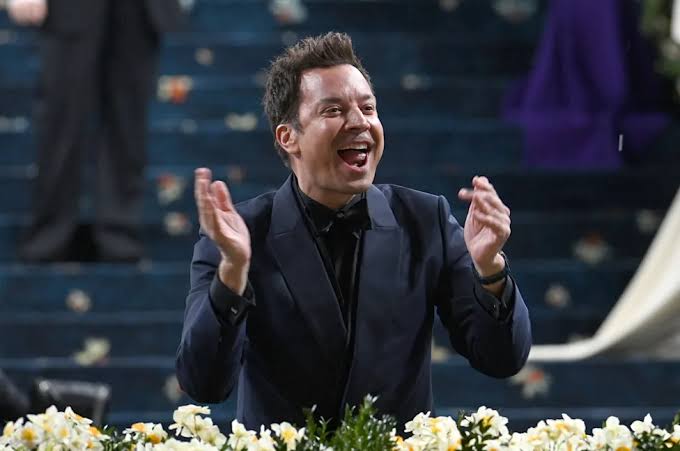
The keyword risk live Jimmy Fallon sounds messy, but the intent behind it is very real. People search around celebrity live clips, late-night show moments, interviews, music performances, and viral segments because they want to know what happened before social media turns one moment into a whole story.
Jimmy Fallon content is especially clip-friendly. The Tonight Show format is built around interviews, games, monologues, music performances, celebrity reactions, and short moments that travel well on YouTube, TikTok, X, Facebook, and entertainment blogs. NBC’s official page describes The Tonight Show Starring Jimmy Fallon as broadcast live from Rockefeller Center in New York and airing weeknights at 11:35/10:35c on NBC.
For Viral Livestream Sound of Text, this topic belongs in the Risks category because the danger is not Jimmy Fallon himself. The danger is the viral ecosystem around talk show streams: fake live links, clipped context, copyright issues, celebrity-bait pages, and viewers trusting the fastest repost instead of the original source.
2026 Is The Year Viewers Need To Stop Treating Viral Talk Show Clips As Neutral
A viral clip is never just a clip. It is a cut. Someone chose the start point, the end point, the title, the caption, and the frame that should carry the emotion.
The Official Source Is Usually Less Dramatic Than The Viral Caption
The official Tonight Show YouTube channel posts recent clips, games, interviews, and live performances. That official channel is a cleaner starting point than a random repost account because viewers can compare the viral version against the source material.
This matters because a talk show moment can be funny in full context and awkward in a short crop. A guest may be joking. A pause may be edited to feel colder. A laugh may be separated from the setup. A music performance may be reposted with a title that makes it sound controversial when it was simply a normal broadcast moment.
The cheap internet move is to make every celebrity clip look like an incident. The smarter viewer asks where the original version is.
Viral Entertainment Pages Often Sell Emotion Before Accuracy
Entertainment content spreads because it feels easy. A short clip of a celebrity, a surprised face, or a sharp joke does not ask much from the viewer. That is exactly why it is risky.
A caption can say “Jimmy Fallon reacts awkwardly” when the full clip shows a normal comedy beat. A repost can say “live moment goes wrong” when the official segment was edited and packaged for entertainment. A random account can use the show’s name to attract clicks without giving the viewer enough source context.
In 2026, the viewer who reacts first often becomes part of the distribution problem.
The First Risk Is Fake Live Access
When people search for celebrity shows live, they may land on pages that promise free access to an NBC broadcast, a live interview, or a Tonight Show stream. Some are legitimate. Some are not.
Official Live Access Has Clear Platforms
The Tonight Show can be watched through official or licensed routes. NBC has an official Tonight Show page, YouTube TV lists The Tonight Show Starring Jimmy Fallon as live TV content subject to availability, and Peacock presents The Tonight Show as part of its NBC show catalog.
That kind of access has recognizable branding, subscription rules, availability notes, or broadcaster identity. It does not need fake “HD server” buttons or strange popups.
Fake Stream Pages Usually Look Urgent And Messy
A risky live page often tries to rush the viewer. It may use phrases like “watch now free,” “live HD no sign up,” “exclusive stream,” or “Jimmy Fallon live tonight full episode.” It may open new tabs, push browser notifications, or ask for a suspicious download.
Research on illegal live streaming services found that illegal streaming domains expose users to deceptive ads, malicious browser extensions, scams, and extensive tracking.
That research is not about Fallon specifically, but the lesson applies to celebrity live searches: when a page promises premium live access without a clear legal source, the viewer is probably the product.
The Second Risk Is Copyright Trouble Around Reposts
Talk show content is not free raw material just because it is entertaining. Official clips, interviews, music performances, and show segments are protected media.
Platform Sharing Is Different From Reuploading
YouTube’s terms say users are not allowed to reproduce, download, distribute, broadcast, sell, license, alter, or otherwise use YouTube content except when expressly authorized by the service or with prior written permission from YouTube and the relevant rights holders.
That distinction matters. Sharing an official clip link is not the same as downloading the clip, cropping it, adding a dramatic caption, and reposting it elsewhere as if it were yours.
A viewer can enjoy a Tonight Show clip. A creator can comment on public entertainment moments. But building a repost channel around copyrighted talk show content without understanding rights is a bad strategy.
Live Reactions Can Be Hit By Platform Systems
If someone tries to livestream or react live using long copyrighted segments, the risk becomes sharper. YouTube says live streams are scanned for third-party content and can be temporarily interrupted or terminated if third-party content remains in the stream.
That means a creator reacting to a Tonight Show segment live should not assume the stream is safe because they are “just reacting.” A safer format uses short references, strong commentary, official links, and enough transformation that the content is not just a rebroadcast with a facecam.
The Third Risk Is Clip Context Collapse
Talk shows are built on timing. Viral platforms are built on compression. Those two systems do not always cooperate.
Comedy Beats Can Look Different After Cropping
A late-night segment often depends on setup, timing, tone, guest familiarity, and audience rhythm. Remove those pieces and the moment can change meaning.
A guest’s pause can look uncomfortable. A joke can look rude. A host’s laugh can look dismissive. A playful game can look chaotic. The viral internet often rewards the version that feels more dramatic, even if the fuller segment is ordinary.
That is the context collapse problem. The clip may not be fake, but it can still be unfair.
Music Performances Need Even More Care
The Tonight Show’s official YouTube channel includes live performances, which can travel quickly when artists have strong fanbases.
Music clips carry extra risk because fandom reacts fast. A short cut of a vocal moment, crowd response, camera angle, or performance choice can turn into praise, criticism, or fanwar material. A 12-second crop can make viewers judge a full performance they never watched.
For viral livestream culture, that is a weak way to understand music. The full performance matters.
The Fourth Risk Is Celebrity-Bait Packaging
Celebrity names are traffic magnets. Jimmy Fallon’s name, a famous guest, and the word “live” can create enough curiosity for low-quality pages to build misleading posts around them.
The Name Can Be Used To Pull Viewers Into Unrelated Content
Some pages use celebrity keywords to attract viewers, then deliver reposts, old clips, fake streams, or unrelated ads. The page may not be about The Tonight Show at all. It only borrows the name because the name attracts searches.
This is why viewers should check whether the source is:
H3 Official NBC Or Tonight Show Source
NBC, Peacock, YouTube TV, and the official Tonight Show YouTube channel are clearer sources than random pages that only use the name for search traffic.
H3 Verified Entertainment Reporting
Entertainment reporting can be useful when it links back to the original segment, names the episode, explains the guest, and does not pretend a clip proves more than it shows.
H3 Random Viral Repost Accounts
These are the weakest sources. They often post the most emotional version because the goal is not context. The goal is sharing.
The Fifth Risk Is Mistaking Clips For Live TV
A clip is not the same as watching the show live. A YouTube upload is not the same as the NBC broadcast. A Peacock episode page is not the same as a random livestream mirror.
Different Access Routes Mean Different Viewer Expectations
NBC’s official page frames The Tonight Show as a broadcast show, YouTube TV lists it as a live TV option, Peacock lists it as an NBC show available through its service, and YouTube hosts official clips and performances.
Those are different experiences. A viewer looking for a full episode should not expect every segment to be available as a free clip. A viewer watching official YouTube clips should not assume they are seeing the whole broadcast. A viewer searching “live” should not trust every page that claims to stream NBC content.
The safer habit is to match the intent to the source.
The Sixth Risk Is Reposting Without Understanding Rights Or Reputation
A creator may think reposting a Jimmy Fallon clip is harmless because “everyone does it.” That is lazy reasoning.
The Clip Can Damage The Reposter More Than The Original Show
A random repost account can look cheap fast. If it crops official entertainment clips without source context, uses misleading titles, and chases celebrity names, the account may get clicks but not trust.
In 2026, trust is harder to build because viewers are already surrounded by recycled content. A creator who wants to discuss viral talk show moments should add something real: commentary, comparison, media literacy, performance analysis, or cultural context.
Otherwise, they are not building content. They are recycling attention.
Official Clip Links Are Cleaner Than Stolen Uploads
YouTube Help says clips can be made from eligible videos or live streams and shared by anyone who has access to the original video. It also notes that clips remain connected to the original video access.
That is much cleaner than downloading someone else’s show segment and reposting it as standalone content. Platform-native sharing keeps the original source closer to the viewer.
The 2026 Review Is Simple And A Bit Brutal
The viral talk show ecosystem is fun, but it is also sloppy. Too many viewers treat a dramatic caption as proof. Too many repost pages use celebrity names as bait. Too many creators confuse reaction with permission. Too many people watch a clip and behave as if they watched the whole segment.
The Stronger Viewer Checks Before Reacting
A stronger viewer does three things before joining the pile-on. They check whether the clip is from an official Tonight Show source. They look for the fuller segment when the moment seems controversial. They notice whether the caption is explaining the clip or trying to inflame it.
That small pause changes everything.
The Stronger Creator Adds Context Before Posting
A stronger creator does not just repost a celebrity moment and ask, “What do you think?” They explain what the original segment was, where it came from, what happened before the clip, and why the moment is worth discussing.
That is how viral commentary becomes useful instead of parasitic.
A Safer Way To Handle Risk Live Jimmy Fallon Searches
The phrase risk live Jimmy Fallon should push viewers toward caution, not panic. The risk is not that every Fallon clip is dangerous. The risk is that celebrity livestream culture makes people careless.
Use official sources first. NBC, Peacock, YouTube TV, and the official Tonight Show YouTube channel are cleaner starting points than random live mirrors or repost pages. Treat viral captions as claims, not facts. Be careful with copyrighted segments. Do not trust fake “watch live free” pages. Do not repost clips without context and then act surprised when the meaning changes.
A viral clip can be entertaining. It can also be incomplete. In 2026, the viewer who understands that difference is already ahead of half the internet.

Yun Seo-jun worked in online reputation monitoring for entertainment companies and consumer brands. His role involved tracking viral live moments, identifying misleading clips, documenting audience reactions, and preparing reports during digital controversies. He now writes about viral livestream cases, responsible content sharing, creator accountability, audience manipulation, and the ethical questions that often appear when a live broadcast spreads beyond its original audience.

1 comment
Comments are closed.